
Neck pain affects millions of people every year for a whole host of different reasons, including office workers hunched over laptops, to athletes pushing through training sessions. If you’ve been wondering whether sports massage could help your aching neck and shoulders, you’re in the right place!
Key Takeaways
- You’ll be please to know that most instances of mild to moderate neck pain improve significantly within two to three weeks with gentle movement and simple self-care measures.
- Common causes are nothing to fear: poor posture, stress, sports injuries, getting a little overzealous during DIY or gardening, and you’ll often find shoulder pain comes with headaches.
- Sports massage can help to reduce muscle soreness and increase blood and lymphatic circulation, promoting the delivery of oxygen and nutrients involved in repair. It’s just as important to seek a relaxing environment to help calm the muscles, regulate the nervous system and relieve stress.
- Hands-on treatments work best when combined with active rehabilitation, posture changes, and regular movement. The worst thing you can do is stay still for too long as this encourages the muscles in the neck to seize further.
- Seek urgent medical review if you experience severe pain after trauma, arm weakness or numbness, or worrying symptoms like unexplained weight loss, night sweats, or a persistent low-grade fever.
What is neck pain and how common is it?
Neck pain, or cervicalgia, typically arises from everyday habits, wear and tear, or sudden injuries. Most people feel it somewhere between the base of the skull and the tops of the shoulders, though discomfort can spread into the upper back or down the arms.
Neck pain is very common and affects many people worldwide. Studies show that at any given time, up to 40% of people may experience neck pain, and nearly 87% of adults may have it at some point in their lives. People who spend a lot of time working at desks, driving, or using phones and computers are especially likely to have neck pain.
We find that neck discomfort usually stems from everyday life or age-related wear and tear. Episodes can be acute (lasting days to a few weeks), subacute (up to three months), or chronic (longer than three months). The good news: most acute neck pain is caused by muscle strain, stress or minor joint irritation and improves within a few weeks using gentle methods.
Neck pain often occurs alongside shoulder problems, upper back stiffness, or headaches. These associated issues can influence how quickly you recover but the good news is they’re easy to address together.

Possible causes of neck pain
Neck pain is most commonly caused by muscle strain from poor posture, awkward sleeping positions, or physical and emotional stress.
Postural and lifestyle causes:
- Forward head posture from phones and laptops (sometimes called “tech neck”)
- Prolonged desk work or driving in the same position
- Awkward sleeping positions can lock the neck into an unnatural angle overnight
- Not to mention, life is hard! Being busy, rushing around all day and being stressed usually goes straight to the shoulders. Your brain and body are connected more than you might think.
Joint and disc-related causes: As the body ages, the protective cartilage and spinal discs between the vertebrae naturally dry out, flatten, and degenerate. This process, called cervical spondylosis, affects roughly 25% of adults under 40 and up to 85% over 60. Facet joint irritation and degenerative conditions can also trigger shoulder pain or arm symptoms.
Nerve involvement: Bone spurs or herniated spinal discs can bulge outward, narrowing the spinal canal and pressing on nearby nerve roots. A pinched nerve (cervical radiculopathy) can cause shooting pain, tingling, or weakness into the arm and hand.
Trauma-related causes: Whiplash from road traffic collisions, sports injuries in rugby or contact sports, cycling falls, and manual work incidents can all cause injury to the neck.
Common symptoms that accompany neck pain
Neck problems rarely indicate a serious disease…phew! But they can produce a wide range of overlapping symptoms, including referred pain (pain you feel elsewhere) and neurological sensations (burning, numbness, tingling, pins and needles, cold, or altered sensation). Neck pain typically presents as localised discomfort but can also cause secondary symptoms across the upper body.
Mechanical symptoms
Stiffness or a sharp pain when turning the head, muscle tightness in the neck and upper back, and pain worsening after long periods in one position are typical. These often affect the upper trapezius, levator scapulae, and muscles around the shoulder blades. Usually referred to as a ‘crick neck’.
Shoulder and upper back symptoms
Neck issues frequently refer pain into the shoulders and upper spine. Shoulder pain can aggravate neck tension, creating a cycle of causing pain that limits range of motion.
Neurological symptoms
Tingling, numbness, pins and needles, burning pain, or weakness in the arms or hands may indicate nerve root compression. Pain that radiates down your arms or legs and severe weakness, numbness, or tingling in your extremities are concerning symptoms that need professional evaluation.
Headaches and dizziness
Tension or cervicogenic headaches often accompany neck problems. Some people notice mild dizziness or light headedness, though severe or sudden dizziness with speech or vision changes needs urgent review.
Warning combinations
Difficulty walking, loss of balance, trouble moving your arms or legs, or bladder and bowel changes require emergency assessment.
Self-care: How to ease neck pain at home
Most causes of neck pain eventually improve and can be managed at home with appropriate treatments. For most people, gentle movement and simple measures are the safest and most effective way to ease neck pain. Remember! The very worst thing you can do for muscular neck pain is nothing. Warmth and gentle movement are important for recovery.
Pain relief options
Home remedies for neck pain relief include taking pain relief medications such as paracetamol or ibuprofen (if suitable), and topical anti-inflammatory gels. Always follow package directions and check with a pharmacist if you’re unsure about pain medicine.
Heat
Applying heat in the form of a wheat bag or hot water bottle can help encourage blood to the area and relax the muscles involved. A warm bath or shower are great as they provide heat and help to calm and relax your nervous system. Your nervous system is the key to your muscles!
Posture and movement strategies
Keep screens at eye level, take regular breaks every 30-40 minutes, and avoid slouching. Rolling shoulders back and practicing good posture throughout the day helps reduce muscle tension.
Gentle exercises
Gentle range of motion exercises can prevent stiffness in the neck. Try slow side to side turning, tilting ear toward shoulder, and gentle chin tucks. Stop if movements trigger sharp or radiating pain. Specific exercises to strengthen the upper back muscles support long term recovery.
Sleep adjustments
Choose one firm supportive pillow, avoid very high stacks, and keep your head aligned with your spine. Avoid sleeping face down, although it’s difficult to break the habit of a lifetime, so don’t give yourself a hard time if this one isn’t so easy.
Stress management
Muscle tension related to stress can aggravate neck and shoulder pain. Brief walks, breathing exercises, and relaxation techniques help. Neck pain caused by common issues like strains and stress usually improves within a week or two, but it may take a few months for complete recovery.
Our top tip to relieve sharp neck pain (aka crick neck)
As much as our clients scowl at us when we mention this, it really does help.
Have a think, what is one activity people generally don’t jump to doing, is warm and creates heat, while encouraging gentle shoulder, head and neck movement?
Ironing.
We’re sorry, but also, we’re not sorry!
Sports massage for neck pain
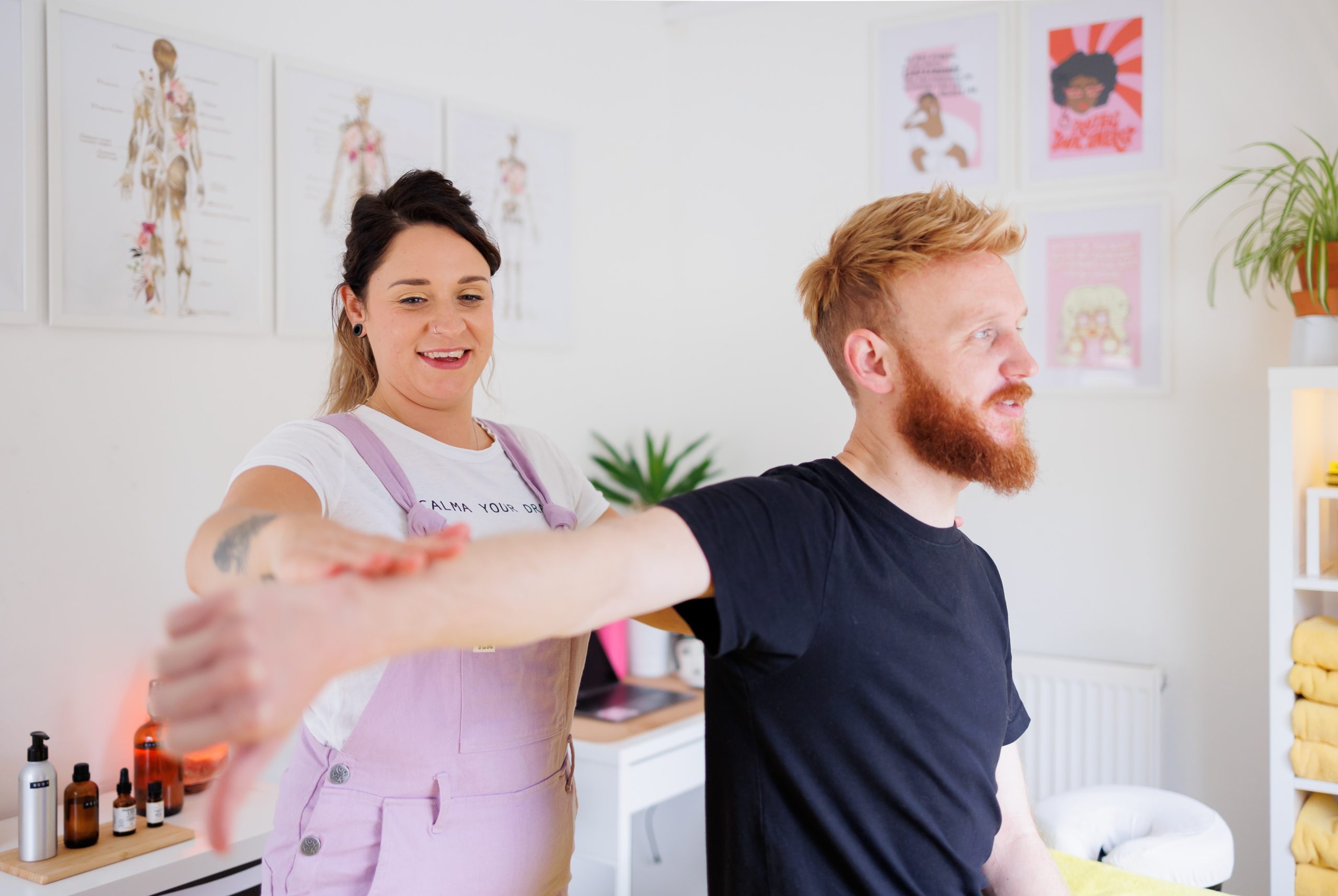
If self care isn’t enough, hands on treatment can help improve movement and support muscle recovery. Sports massage is particularly useful for people with activity related or training related neck and shoulder problems. Here at Elbow Sports Massage, we create a calm, relaxing and welcoming environment with therapists who are always happy to lend an ear should you need it for those times when something (or some one..!) is contributing to that pain in your neck. Stress is not to be underrated in the role it plays in neck pain.
How sports massage helps
Sports massage can help to reduce muscle soreness and increase blood and lymphatic circulation, promoting the delivery of oxygen and nutrients involved in repair. It targets muscle tissues, tendons, connective tissue, and the central nervous to reduce muscle tension, improve range of motion.
Sports massage is effective in reducing delayed onset muscle soreness (DOMS) by flushing out waste products and increasing blood flow to the muscles, which aids in recovery. This makes it valuable after intense training sessions or competitive sports.
Deep tissue massage
For chronic tightness and long-standing muscle knots, deep tissue massage applies sustained pressure to deeper tissue structures. It may cause temporary muscle soreness but can help restore range of motion when applied appropriately. Swedish massage offers a gentler alternative for those who prefer lighter pressure.
Choosing a practitioner
Choose therapists who are accredited and knowledgeable about neck and shoulder anatomy. It’s important to communicate openly about the pressure during your session and to let your therapist know if you feel any sharp or radiating pain so they can adjust accordingly. If your neck pain is related to structural issues, specialists like neurological surgeons or pain experts might be involved in your care to make sure you get the right treatment.
Preventing neck pain
Preventing neck pain is often easier than treating a severe flare up. Small daily habits make a significant difference, especially for desk workers, drivers, individuals prone to stress, or those who train regularly.
Workstation ergonomics
- Screen at eye level
- Keyboard and mouse within easy reach
- Feet flat on the floor
- Chair with proper lumbar support
Daily habits to prevent neck pain
- Take movement breaks every 40 minutes (set a timer to stand and move for 2-3 minutes)
- Avoid cradling phones between ear and shoulder
- Limit prolonged forward head posture when using smartphones
- Stay active with regular exercise
Exercise routines
Weekly strengthening for the upper back and deep neck flexor muscles helps maintain muscle balance. Shoulder blade stabilising exercises support the whole upper body. More movement throughout the day prevents stiffness from building.
Maintenance treatments
Regular sports massage can help to identify potential areas of tension or weakness within the musculoskeletal system, assisting in preventing the development of injuries. Occasional sessions help catch tight areas before they become painful and reduce recovery time after training.
When to see a doctor about neck pain
Contact a GP or NHS 111 if:
- Pain doesn’t start to improve after 1-2 weeks of self-care
- Pain spreads into the arm with numbness or weakness
- Neck pain interferes with sleep and daily tasks
- Schedule an appointment with a general practitioner or physiotherapist if your neck pain fails to improve or continuously worsens after a few weeks of self-care
Seek emergency care (A&E or 999) if:
- Neck pain follows a major accident (road traffic collision, diving accident, significant fall)
- Inability to move arms or legs
- Loss of bladder or bowel control
- High fever with stiff neck
- Sudden, severe headache unlike usual
Contact a doctor promptly if your neck pain is accompanied by signs of nerve compression or systemic illness. People with a history of cancer, osteoporosis, or long-term steroid use should be particularly cautious with new or unexplained neck pain. Unexplained weight loss, night sweats, or a persistent low-grade fever are systemic signs that warrant professional evaluation.
Neck pain often stems from muscle strain, poor posture, stress, or age related joint wear, and can signal nerve compression or a serious underlying medical emergency in rare cases. Physical therapy, combined with appropriate medical history review, helps most people return to normal activities.
FAQ: Neck pain questions people often ask
Can neck pain cause headaches or dizziness?
Tight neck muscles and irritated joints at the top of the neck can contribute to tension type or cervicogenic headaches, often felt at the back of the head or behind the eyes. Some people with neck problems notice mild dizziness or a sense of imbalance due to cervical proprioceptive dysfunction.
Severe or sudden dizziness, especially with speech, vision changes, or swelling, needs urgent medical review. Persistent headaches with neck pain should be discussed with a GP or physiotherapist to rule out other causes and plan appropriate treatment for your specific medical conditions.
Is it safe to exercise when I have neck pain?
Gentle movement and light exercise are usually safe and often helpful for most mechanical neck pain, as long as they don’t sharply increase pain or cause new arm symptoms. Walking, gentle stationary cycling, and basic neck and shoulder mobility exercises make good starting points.
Avoid heavy lifting, contact sports, or high intensity gym work until the acute pain settles, especially if the injury was recent. These activities can enhance performance when you’re healthy but may worsen inflammation during a flare-up. Seek professional advice if you’re unsure which exercises suit your legs, body, and upper body strength levels.
Can a sports massage or deep tissue massage make neck pain worse?
Mild muscle soreness for a day or two after sports massage or deep tissue massage is common, particularly when muscle fibres were very tight beforehand. This should then improve.
Overly aggressive or poorly targeted pressure in the neck region can aggravate pain or irritate sensitive structures, especially with nerve involvement or acute inflammation. Choose qualified therapists, communicate openly about pain levels, and stop if you experience sharp, radiating, or unbearable pain. Anyone with suspected fracture, soft tissue injuries, or significant neurological symptoms should be medically assessed before intensive neck massage.
Will my neck pain keep coming back?
Many people experience recurrent episodes of neck pain, especially if underlying risk factors like bad posture, stressful work, or weak upper back muscles aren’t addressed. Research suggests 50-75% of people with current neck pain will have another episode within 1-5 years.
Targeted exercises, ergonomic changes, regular movement breaks, and maintenance treatments like sports massage can reduce the frequency and intensity of flare-ups. Think of neck care as an ongoing habit rather than a one off fix, especially if you have degenerative conditions like cervical spondylosis. Addressing joints, muscle spasms, and reducing muscle tension consistently keeps you in control of your symptoms and helps relieve pain long-term.
If you’re experiencing neck pain, and ready to get relief, get in touch with us today to book an appointment.